Headlines

CIA Khashoggi findings 'highly damaging' to Mohammed bin Salman

Posted by مؤسسة الوطن العربى الإعلامية - لندن ، المملكة المتحدة . WA MEDIA FOUNDATION - LONDON, UK | Sunday, 18 November 2018 | Posted in

CIA Khashoggi findings 'highly damaging' to Mohammed bin Salman..


Arab Gazette - Martin Chulov Middle East correspondent..

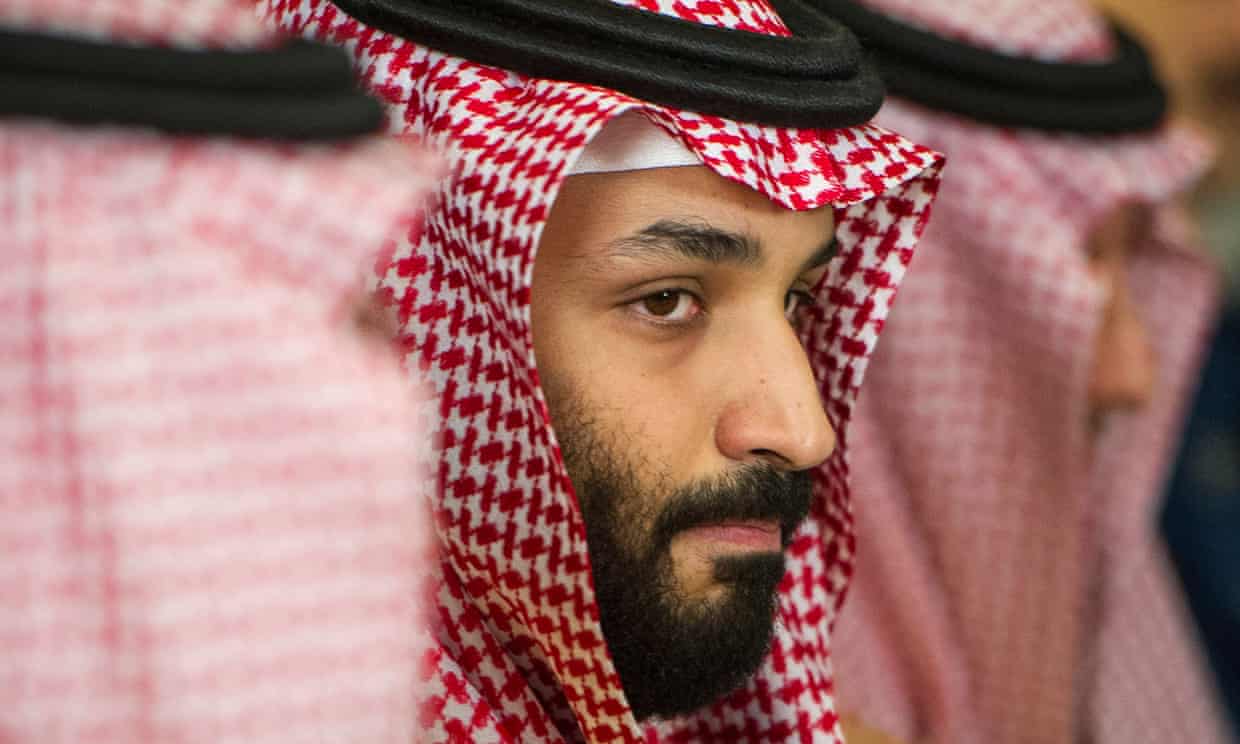
The CIA’s conclusion that the murder of Jamal Khashoggi was ordered by Crown Prince Mohammed bin Salman has been described as the most damaging blow yet to the de facto Saudi leader, officially placing him at the heart of a scandal that continues to shake the region.

The finding, first reported by the Washington Post, for which Khashoggi had written, was the first US government assessment linking Prince Mohammed to the dissident Saudi’s death in Turkey.

It came after Donald Trump and his national security adviser, John Bolton, had tried to shield him from criminal investigations that have incriminated 21 Saudi agents in the grisly murder.

The US president had previously suggested the killing inside the Saudi consulate in Istanbul was carried out by rogue actors who had exceeded their authority.

The CIA found, however, that Prince Mohammed’s tight grip on decision-making made such a claim highly unlikely.

A European intelligence official told the Observer the CIA’s finding was “highly damaging to the kingdom’s official narrative”.

Donald Trump discussed the CIA assessment by phone with the agency’s director, Gina Haspel, and secretary of state Mike Pompeo on Saturday, White House spokeswoman Sarah Huckabee Sanders told reporters. Trump, visiting California, called the CIA assessment “very premature” but said it was “possible” Prince Mohammed was responsible. The State Department spokeswoman Heather Nauert said: “Recent reports indicating that the US government has made a final conclusion are inaccurate.” As has become customary in the US administration’s response, she and Trump underlined the importance of the US-Saudi strategic relationship.

Formerly a strong supporter of the prince, Trump has appeared frustrated at the Khashoggi case and the complicity of senior officials, which has mapped a path to the doors of the royal court. Both Republican and Democratic senators on Saturday urged Trump to be tough on the crown prince. “Everything points to the Crown Prince of Saudi Arabia, MbS, ordering Washington Post journalist Jamal Khashoggi’s killing. The Trump administration should make a credible determination of responsibility before MbS executes the men who apparently carried out his orders,” tweeted Senator Bob Corker, chairman of the Senate foreign relations committee.

The Democratic senator Richard Blumenthal tweeted: “Trump must accept for once his intelligence experts’ incontrovertible conclusion: Crown Prince MBS is culpable for Khashoggi’s monstrous murder. This brazen killing must have consequences – sanctions, prosecution, removal of MbS and others, not continued cover-up, enabled by Trump.”

The CIA claim came after six weeks of relentless pressure on the kingdom and the crown prince, who has denied any knowledge of the hit squad sent to Turkey or its mission.

A European intelligence official said the finding from a top intelligence agency was “highly damaging to the kingdom’s official narrative”.

The Washington Post reported that the agency strengthened its conclusions after reviewing two intercepted calls. One was reportedly between Prince Mohammed and his brother Khalid bin Salman, the Saudi ambassador to Washington, and captured the former discussing ways to get Khashoggi back to Riyadh.

The second call reportedly captured Prince Khalid assuring Khashoggi that it was safe to visit the consulate in Istanbul.

Khashoggi arrived there on 2 October and never left. A Turkish-led investigation has found that he was killed and dismembered within seven minutes of entering the building. His body has not been found.

Prince Khalid strongly denied having been in contact with Khashoggi in the past year, and called on US officials to table their evidence.

“The last contact I had with Mr Khashoggi was via text on Oct 26 2017,” he said on Twitter. “I never talked to him by phone and certainly never suggested he go to Turkey for any reason. I ask the US government to release any information regarding this claim.”

The Saudi position has moved throughout the investigation. An initial blanket denial of any involvement, coupled with an assurance from Prince Khalid that Khashoggi walked freely from the consulate, gave way around 10 days later to a grudging admission that he had been killed in a fist fight, then to a concession that the killing had in fact been premeditated.

On Thursday, the Saudi state prosecutor claimed Khashoggi had died from an overdose of a drug injected into him by agents.

Turkey has attempted to maintain pressure on its regional rival, and Prince Mohammed in particular, by continuing to leak details of the investigation.

During the week, Turkish officials told government-aligned media that audio tapes existed of the conspirators going over their roles as they waited for Khashoggi.

The existence of tapes remains central to the investigation. Turkish intelligence officers are believed to have had a long-term bug inside the Saudi consul general’s office, where the first stages of the ambush occurred. A streaming call is also believed to have taken place at some stage during the killing.

After Khashoggi had died, a member of the kill team reportedly called an aide to Prince Mohammed and said: “Tell your boss the deed was done.” The contents of this call have added weight to the CIA’s assessment.

The western intelligence official said it was unusual for an intelligence agency to be so definitive in such a sensitive matter.

“The fact that they have means that they really do hold solid material. These intercepts will cause him [Mohammed] problems.”
Enemies and Neighbours by Ian Black review – Arabs and Jews in Palestine and Israel

Posted by مؤسسة الوطن العربى الإعلامية - لندن ، المملكة المتحدة . WA MEDIA FOUNDATION - LONDON, UK | | Posted in

Enemies and Neighbours by Ian Black review – Arabs and Jews in Palestine and Israel..


Arab Gazette - PD Smith..

A 2016 poll found that 82% of young Israeli Jews believed there was little chance of a peace agreement with the Palestinians. Faced with expanding Jewish settlements, almost as many Palestinians believed the two-state solution was no longer viable. Under Benjamin Netanyahu, Israel’s longest-serving prime minister since David Ben-Gurion, the reality of life today is more akin to an “apartheid state”, as veteran journalist Akiva Eldar has said: “One state for two peoples – first-class citizens and second-class citizens”.

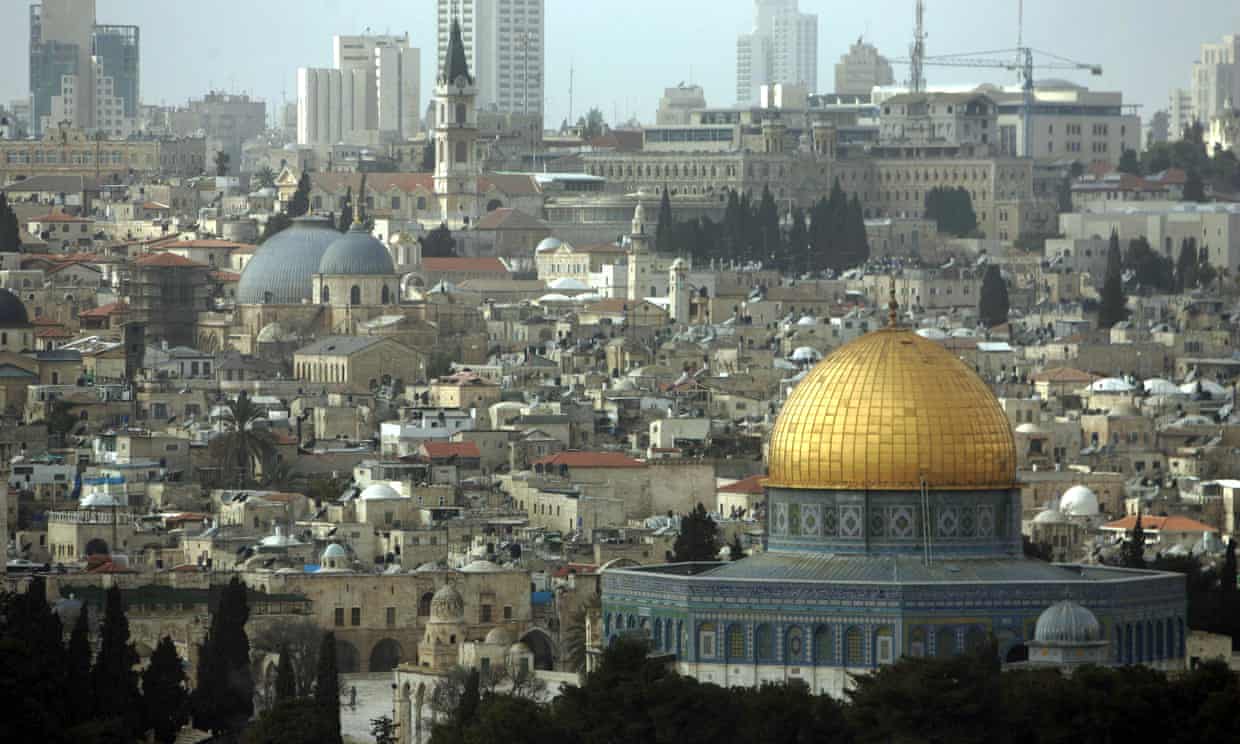
In this study Ian Black, the Guardian’s former Middle East editor, explores the origins of this most bitter and intractable conflict from the first Zionist settlements in the 1880s, through the founding of the state of Israel in 1948 – known as the “Nakba”, or catastrophe, to Palestinians – to the Trump era.

Black concludes: “There is no sign whatsoever that this conflict is about to end, so understanding it matters more than ever.” His detailed and even-handed account, the result of exhaustive archival research and 40 years of journalistic experience on the ground, is the perfect place to start.

• Enemies and Neighbours: Arabs and Jews in Palestine and Israel, 1917-2017 by Ian Black is published by Penguin. To order a copy for £9.67 (RRP £10.99 ) go to guardianbookshop.com or call 0330 333 6846. Free UK p&p over £10, online orders only. Phone orders min p&p of £1.99.

Benjamin Netanyahu rejects calls for election and takes defence portfolio

Posted by مؤسسة الوطن العربى الإعلامية - لندن ، المملكة المتحدة . WA MEDIA FOUNDATION - LONDON, UK | | Posted in

Benjamin Netanyahu rejects calls for election and takes defence portfolio..


Arab Gazette - Associated Press in Jerusalem..

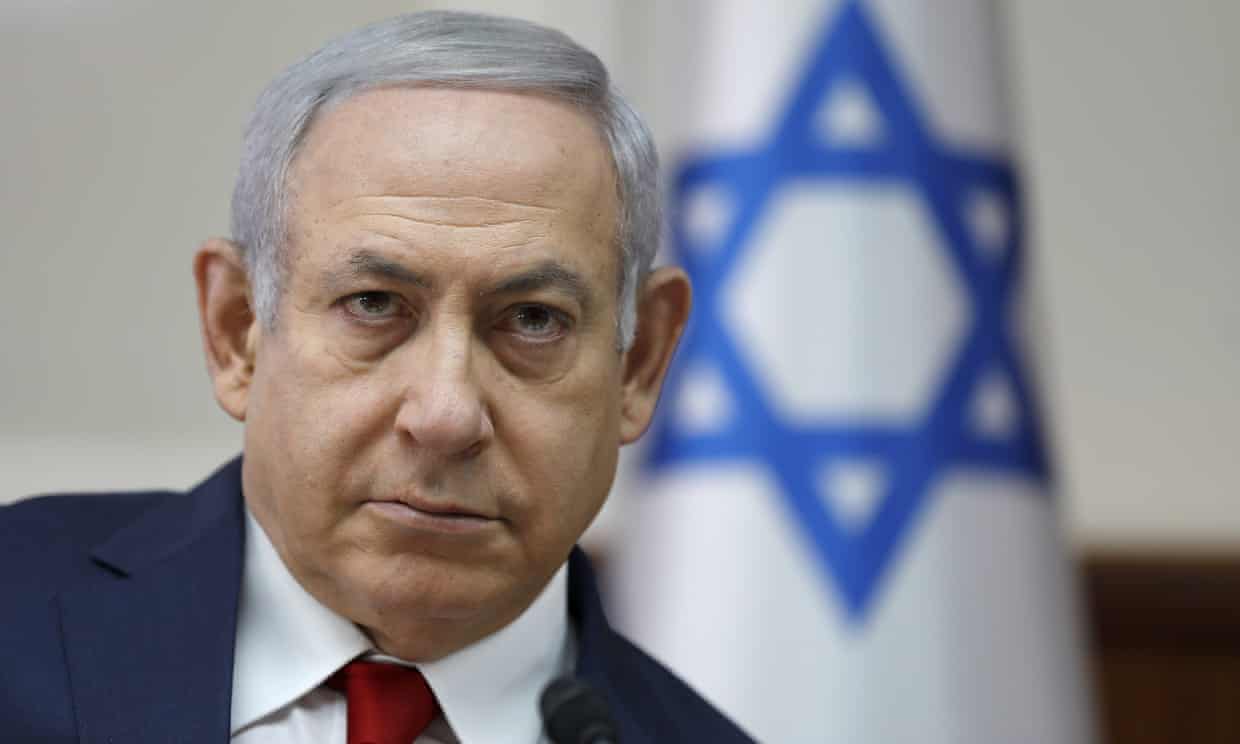
Israel’s prime minister, Benjamin Netanyahu, has said he will take on the defence minister portfolio, rejecting calls to dissolve his government even as early elections appeared increasingly likely.

Netanyahu said heading to elections now, amid repeated violent confrontations with Gaza militants, was “irresponsible” of his coalition partners, who have been pushing for early polls since the resignation last week of the defence minister, Avigdor Lieberman, over a Gaza ceasefire.

“Today, I take on for the first time the position of defence minister,” said Netanyahu on Sunday, speaking from Israel’s defence headquarters in Tel Aviv in a statement broadcast live at the start of the evening news. “We are in one of the most complex security situations and during a period like this, you don’t topple a government. During a period like this, you don’t go to elections.”

The sudden coalition crisis was sparked by the resignation of the hawkish Lieberman, who had demanded a far stronger response last week to the most massive wave of rocket attacks on Israel since the 2014 Israel-Hamas war. He alleges the ceasefire agreement reached with Gaza’s Hamas rulers will put southern Israel under a growing threat from the group, similar to that posed to northern Israel by Lebanon’s heavily armed Hezbollah.

The departure of Lieberman and his Yisrael Beiteinu party leaves the coalition with a one-seat majority in the 120-member parliament. Netanyahu’s other partners say that makes governing untenable and would leave the coalition susceptible to the extortion of any single lawmaker until elections scheduled for November 2019.

The education minister, Naftali Bennett, of the pro-settler Jewish Home party, has already threatened to bring down the government if he is not appointed defence minister. He and the justice minister, Ayelet Shaked, also of Jewish Home, will deliver a statement to the media on Monday. If the party leaves the coalition, it would strip Netanyahu of his parliamentary majority.

The finance minister, Moshe Kahlon, another senior partner, says another year of such instability will harm the economy. A meeting between him and Netanyahu on Sunday, held to convince Kahlon to stay, ended with no results.

Netanyahu’s Likud allies are already preparing to pin the blame on coalition partners if the effort to salvage the government fails.

“I think that there is no reason to shorten the term of a national government, not even for one day, and at this moment, it’s in the hands of the education minister and the finance minister,” said Gilad Erdan, the minister of public security.

No Israeli government has served out its full term since 1988. Since then, elections have almost always been moved up because of a coalition crisis or a strategic move by the prime minister to maximise his chances of re-election. Although Netanyahu has reportedly been considering the idea of moving up elections himself in recent months, though the current timing is not ideal for him.

He has come under heavy criticism for agreeing to the Gaza ceasefire, especially from within his own political base and in the working-class, rocket-battered towns in southern Israel that are typically strongholds of his Likud party. But with Lieberman forcing his hand, and the other coalition partners appearing eager to head to the polls, he may not have a choice.

Most opinion polls show Netanyahu would easily secure re-election to make him Israel’s longest serving leader, but several factors could trip him up, including a potential corruption indictment that could knock him out of contention.

Police have recommended he be indicted on bribery and breach of trust charges in two cases and have questioned him at length on another. The country has long been eagerly awaiting the attorney general’s decision on whether to press charges. Netanyahu has angrily dismissed the accusations against him, characterising them as part of a media-driven witch-hunt that is obsessed with removing him from office.

Mrs May has put her cards on the table. Now it’s everyone else’s turn.

Posted by مؤسسة الوطن العربى الإعلامية - لندن ، المملكة المتحدة . WA MEDIA FOUNDATION - LONDON, UK | | Posted in

Mrs May has put her cards on the table. Now it’s everyone else’s turn..


Arab Gazette - by: Andrew Rawnsley..

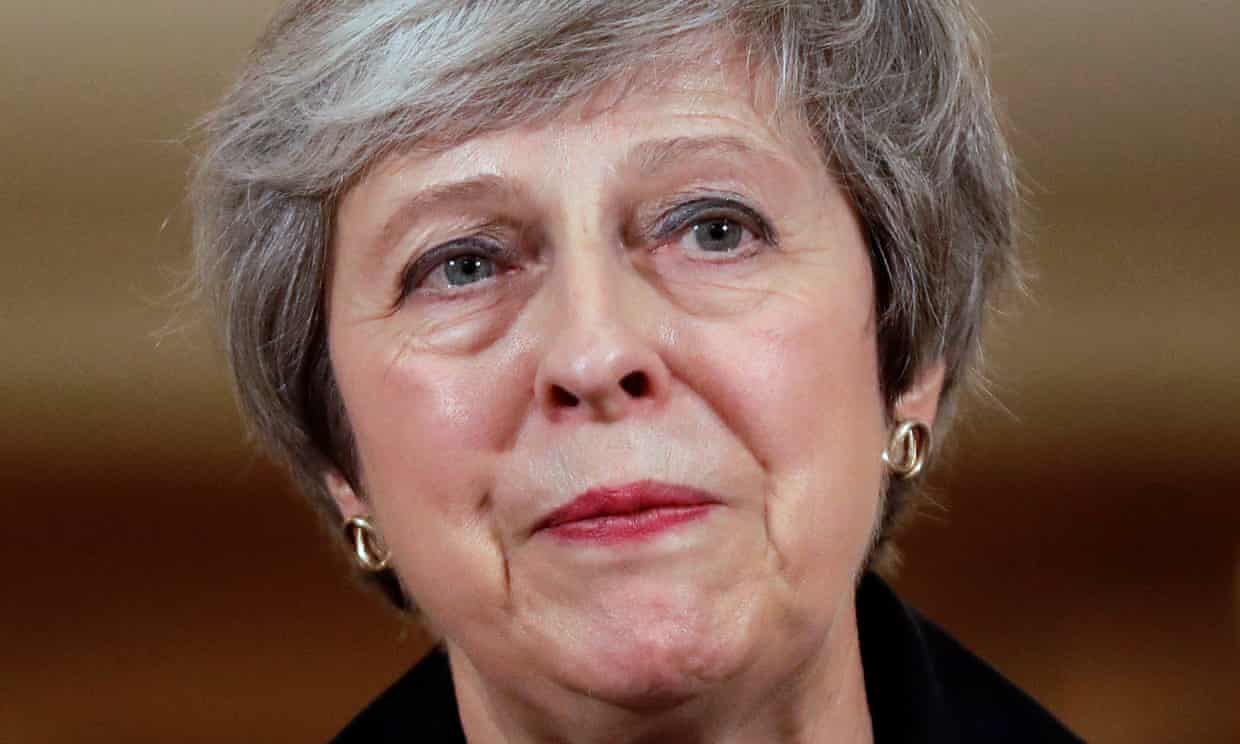
The eye is supposed to be the calmest place in a storm. Weird as this may seem, the most tranquil person in British politics this weekend is probably Theresa May.

This is not the same as saying that she is in a good place. Bits of her government keep falling off, like a decaying gothic folly shedding masonry. Even discounting for the tendency of the Brexit ultras to brag up their strength, a full-frontal attempt to oust her is more likely than at any time in her beleaguered premiership. A confidence ballot of Tory MPs could happen as early as this week.

Her Brexit deal has been brutally savaged from every angle. When she presented it to parliament, more than 60 minutes elapsed before a Conservative MP spoke in her support. Even those that did so could barely muster the enthusiasm of someone recommending a cockroach-infested hotel to a friend on the grounds that it was the only place in town.

I have never seen a prime minister look so friendless at the dispatch box. The human sponge of Number 10 just stood there in the stocks as she was pelted from all sides. This may have attracted a little bit of sympathy from some voters. That certainly seems to be a factor in the calculations at Number 10, where political masochism has been taken to levels never previously visited.

Even if the prime minister is eliciting some public empathy, this won’t make anything easier where it counts: in the pitiless crucible of parliament. Nothing that has happened since she unveiled her deal has made it look more likely that it can secure the approval of the Commons.

So why do I nevertheless say that she is probably the calmest person in British politics? Because she enjoys the relief that comes from knowing that she has arrived at the endgame. She has played out her hand. Her cards on the table. Here’s the deal, parliament. Take it – or do the other things, many of which are the stuff of nightmares. She has reached the ground on which she will fight what may be her last battle.

That means there will now be a much more intense focus on the choices confronting everyone else. The other players in this spider’s web of decision-making will have to spend less time attacking what she has done and start justifying what they are going to do. Others will have to make some momentous choices of their own.

A moment of truth arrives for the Conservative party. At this time of high peril for the country they profess to love, are the Tories going to indulge themselves in a leadership contest? One thing that has changed over the past few days is the number of Tory MPs openly saying, and often with undisguised relish, that they want to depose the prime minister. With attention-seeking vanity, Jacob Rees-Mogg uncloaked himself as an assassin in the Commons. Rather than quietly submit their letters of no confidence, several others of his faction have also noisily declared themselves as Mayicides. The Tory party has always been a treacherous beast, but once it used to conduct its assassination attempts with a degree of politesse. The cabal of Brexit ultras are the men who put the cock into peacocking.

To anyone who does not live in their fantasy universe, this will look like an act of narcissistic self-pleasuring at the expense of Britain. It also has the hallmarks of an exercise in utter futility. Just as they have never produced a plausible solution to Brexit, so the ultras cannot explain precisely what they expect to achieve by attempting to dethrone Mrs May at this point.

If it comes to a confidence vote, most Conservative MPs I speak to expect her to survive. The Moggites need half the parliamentary party to be sure of throwing her out, and they don’t have anything like that strength. If she hangs on, the Brexit ultras will have succeeded only in wasting more vital time when it is in dangerously short supply, making their country even more risible in the eyes of the world, and exposing their own weakness.

It is possible that Mrs May could lose a confidence vote. As I write, that looks like the less probable outcome, but the odds might shift quickly and dramatically. Once the leadership is in play, all sorts of dynamics kick in. One of the more predictable is the ambitions of the many wannabe leaders among the Tories, a party in which the number of people who ache to be prime minister is much larger than the number who are actually capable of doing the job.

If Mrs May is defenestrated “there will be a bloodbath”, predicts one normally phlegmatic senior Tory. Her demise would almost certainly be followed by a chaotic, vicious and protracted struggle for what would be a very hollow crown.

And after wading through all the gore spilt in a leadership contest, the Conservatives would find that this solves nothing. None of the important facts will be changed by putting a different Tory into Number 10. It would still be the case that there is no majority in parliament for the kind of no-deal Brexit that terrifies everyone except those ultras who want to crash out. A new prime minister installed without a general election would face legitimacy issues from the moment he or she stood on the threshold of Number 10.

Crucially, changing the face at the top would not entice an improved offer from Brussels. The EU has already devoted many tortuous months to these horrendously complex negotiations. When they forget to be diplomatic about it, EU officials will confess to being sick of the whole process. The EU is not going to unpick a painfully constructed deal with Mrs May, start all over again and present a better bargain, certainly not of the kind that the Brexit ultras talk about. Some of the member states are complaining already that too much has been conceded to Britain. They will not reward the Tory party for changing its leader with a gift-wrapped Brexit. If anything, the opposite is more likely to be the case.

There are alternative routes forward, the clearest of which is throwing the question back to the people with another referendum. Opening that up will depend on how Labour makes its big choice. As the Tories thrash around in this mire of their own making, it would be unreasonable to fault Labour for seeking to exploit it for party advantage. That is what oppositions have always done. Jeremy Corbyn decries the government for being “in chaos”, which is obviously true but also a convenient way of avoiding clarification of his ultimate intentions. Mr Corbyn is a career-long Europhobe who displayed not an ounce of conviction for remaining within the EU during the referendum, demanded the triggering of Article 50 the morning after, and has not once since expressed a scintilla of remorse about Brexit. “We can’t stop it,” he said very recently. Most of his party’s supporters do want to stop it. The bulk of Labour MPs would prefer to remain within the EU. A massive majority of Labour members think the British people ought to be given an opportunity to reverse Brexit before it is too late.

Advertisement

The Labour leadership has spent many months skilfully, if cynically, camouflaging this division by pretending that it could negotiate all the benefits of membership of the EU while still leaving. We all know this is tripe. For the moment, Labour is just about hanging together around rejection of Mrs May’s deal. This is the common point that can still unite Mr Corbyn, his Remainer MPs and Labour members. The leadership will vote against the deal because it is a “Tory Brexit” and they think that combining with the Moggites in the division lobbies to defeat the government will somehow precipitate an early general election. Remainer Labour MPs will vote against the deal in the hope that doing so will pave the way to a further referendum. But if Mrs May’s deal goes down and there isn’t a general election, then what? There will be no hiding places left for the Labour leadership. Mr Corbyn will be confronted with the choice that he has been desperate to avoid.

Will he follow the desires of his members – the party is, after all, supposed to belong to them these days – and throw the full weight of Labour behind giving the British people the chance to change their minds in a further referendum? Or, when it comes to his moment of truth, does Mr Corbyn plan to sell out his supporters?

Theresa May has made her choices. For others, the agonising has only just begun. It will soon be time for everyone else to take responsibility for fateful decisions of their own.

Harry Kane strikes late to take England through to Nations League finals

Posted by مؤسسة الوطن العربى الإعلامية - لندن ، المملكة المتحدة . WA MEDIA FOUNDATION - LONDON, UK | | Posted in

Harry Kane strikes late to take England through to Nations League finals..


Arab Gazette - Dominic Fifield at Wembley..

In the end, it became another test of character. An examination of a young side’s ability to rouse themselves just as the occasion was veering cruelly off script, with all that giddy pre-match expectation threatening to give way to familiar, asphyxiating anticlimax. Previous England teams might have cramped up, accepting the worst. Plenty of these players had been left drained and dispirited back at the Luzhniki Stadium in July once Croatia, such familiar opponents, had seized the momentum. But lessons have clearly been learned.

This current crop have something about them, a conviction that has been forged by a relaxed, appealing atmosphere around their training camps and a comfort with the style of play implemented and encouraged by the management staff. They appear to be a better team now than they were in the summer, and certainly a squad with more options to explore, so, once behind and chasing, their late rally was almost to be expected. Gareth Southgate’s team were five minutes away from being relegated to Division B of Uefa’s new competition. From one extreme to the other, up stepped the captain to force them into the inaugural finals.

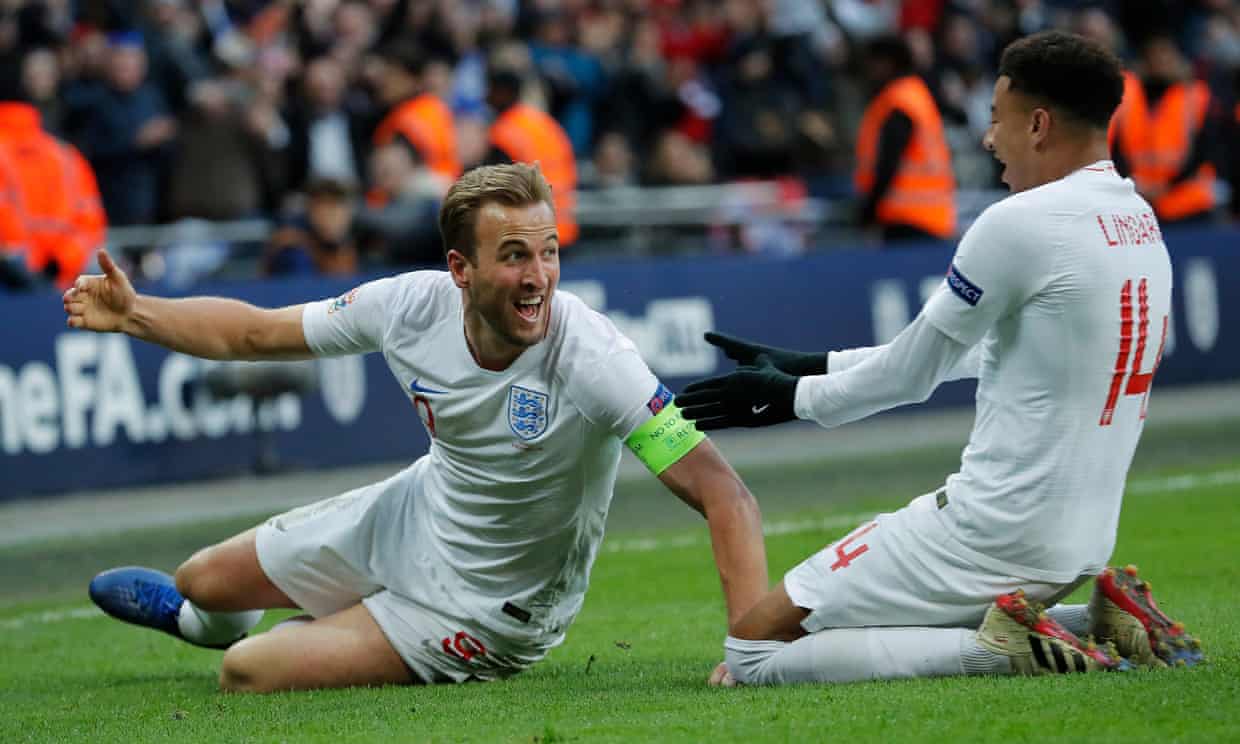
Harry Kane had actually been enduring the longest scoreless run of his England career, a seven-match blank that had stretched all the way back to Colombia in Moscow in the last 16 of the World Cup. But, after Tin Jedvaj had fouled Ben Chilwell, there was the striker to meet the full-back’s low delivery on the stretch as it fizzed across the six-yard box. The ball squirted past Lovre Kalinic and “the best goalscorer in the world”, according to his manager, had his first England goal in 747 minutes to book that week-long jaunt to Portugal. “We had to live with the pressure, and we did,” said Southgate. “We’ve ended up coming out of an incredibly tough group. In terms of form and world rankings, it was probably the toughest.”

They have done so by demonstrating there is, actually, depth to their options despite only around a third of the players in the Premier League being eligible for selection. The staff have stuck firmly to the philosophy that led the team to prosper in Russia, even if the manager could appreciate the irony that it had taken a long throw from Joe Gomez – with a foot actually planted illegally on the pitch, unnoticed by the assistant referee – and a free-kick flung into the box to prise Croatia apart, rather than all the assured and incisive approach play the hosts had mustered during a dominant opening period when, in truth, their delivery at set plays had been relatively desperate. “Maybe we’re not a new England, and we’re actually the England we’ve always been,” offered Southgate through a smile. The fact his side had become the first England team to come from behind to win in the last 20 minutes of a competitive match since playing Cameroon in the World Cup quarter-final at Italia 90 was more reflective of proper progress.

They had merited this victory, for all that the visitors were hampered by injuries, withdrawals and fatigue having beaten Spain only 66 hours previously. Zlatko Dalic would admit as much, pointing to a first half when Croatia had been stretched to survive a prolonged onslaught, heaving to contain England’s pace and invention from wide. Raheem Sterling scuttled beyond Domagoj Vida too often for comfort, Marcus Rashford gliding into space down the opposite flank, with the full-backs marauding at will.

The chances came and went in flurries, Kalinic overworked and stretched to thwart Kane, Sterling twice and Chilwell. Fabian Delph, playing with Jordan Henderson not quite fit enough to start, was authoritative in midfield, an English lead seemingly imminent. But Kane, off balance, skied over the bar, and frustration seemed to set in.

Therein lay another test. Croatia had offered so little, early wastefulness from Ante Rebic aside, but the same might have been said in July. Their own belief is unswerving, so there, just before the hour, was the substitute Josip Brekalo exploiting space down England’s left before supplying a fine pass for Nikola Vlasic. His quickly taken pass shifted the ball across for Andrej Kramaric, squeezing space initially from Kyle Walker, to collect near the penalty spot. The striker twisted and turned, seeking out a clear view of goal and flummoxing John Stones and Eric Dier in the process, with his eventual shot flicking up off the Tottenham midfielder to loop agonisingly beyond Pickford.

For a while, doubt did flare, memories of Moscow rearing up with all the early dominance having given way to grim acceptance. Yet Southgate has spritely options to lift a performance these days. Jesse Lingard, a stalwart from the summer, and the whippersnapper of the moment, Jadon Sancho, would stretch the visitors’ tiring ranks, freeing up space for teammates to exploit. The former would also hack Vida’s header from his own goalline, having just tapped in an equaliser after Kane’s prod from Gomez’s throw had been blocked improbably by Kalinic with his feet.

The din whipped up by parity would drive England on, with supporters engaged rather than idling away their time making paper aeroplanes to litter the turf. Kane’s glorious finale offered the majority real reward. A year of resurgence marked by a World Cup semi-final, a startling win over Spain in Seville and the progression of dynamic, young players into the senior setup has now culminated in Nations League success. A four team mini-tournament awaits in June, when a trophy will be up for grabs. “England have a young and extremely fast team,” added Dalic, deadpan as the strains of “Three Lions” boomed over the public address system outside. “It’s coming home very, very soon.”

'Toxic' beats 'gammon' and 'cakeism' to win Oxford Dictionaries' word of 2018

Posted by مؤسسة الوطن العربى الإعلامية - لندن ، المملكة المتحدة . WA MEDIA FOUNDATION - LONDON, UK | | Posted in

'Toxic' beats 'gammon' and 'cakeism' to win Oxford Dictionaries' word of 2018..


Arab Gazette - Alison Flood..

Oxford Dictionaries has steered clear of “big dick energy” and the derogatory term “gammon” to name “toxic” as its word of the year, citing the adjective’s use to describe everything from the debate around Brexit to the environment and masculinity.

Defining the word as “poisonous”, Oxford said it had become a “descriptor for the year’s most talked about topics”. The dictionary pointed to a 45% rise in the number of times the word has been looked up on its website, and said it best captured “the ethos, mood, or preoccupations” of 2018, thanks to “the sheer scope” of its application.

First appearing in English in the mid-17th century, from the medieval Latin toxicus, “toxic” has also been used to describe workplaces, schools, relationships, cultures and stress over the last year, said the dictionary, with the #MeToo movement shining a spotlight on “toxic masculinity”, a term used to describe the effect of stereotypes that negatively shape male behaviour.

However, the word was most associated with the word “chemical”, appearing most frequently in discussions about the environment, including “toxic substance”, “toxic gas”, “toxic waste” and “toxic air”.

The debate fostered by the Brexit vote has also been described as a toxic environment, along with the rhetoric of world leaders, said the dictionary, while social media platforms “have come under fire for the toxic impact they have on our mental health”.

Oxford University Press’s president of dictionaries, Casper Grathwohl, said: “Reviewing this year in language, we repeatedly encountered the word ‘toxic’ being used to describe an increasing set of conditions that we’re all facing. Qualifying everything from the entrenched patriarchy to the constant blare of polarising political rhetoric, ‘toxic’ seems to reflect a growing sense of how extreme, and at times radioactive, we feel aspects of modern life have become.”

Oxford’s word of the year is intended to “reflect the passing year in language”. Other words and phrases shortlisted for 2018 included “big dick energy”, defined by Oxford as “an attitude of understated and casual confidence”; gammon, which is “typically used in the UK as a derogatory term for an older middle-class white man whose face becomes flushed due to anger when expressing political (typically rightwing) opinions”; and “orbiting”, which is “the action of abruptly withdrawing from direct communication with someone while still monitoring, and sometimes responding to, their activity on social media”.

Last week Collins Dictionary chose the term “single-use”, referring to products made to be used once and then thrown away, as its word of the year.

Egypt’s Red Sea gem: Sharm El-Sheikh grappling with tourism decline

ARAB GAZETTE - CAIRO .. The number of tourists visiting Egypt declined significantly following the crash of the Russian ae...

Blackview WW